The Sycamore is a tall domed deciduous tree of the Maple family. Self-fertile it is grown widely in parklands, hedgerows and woodlands. It was introduced into the UK from Europe and became naturalised sometime in the 15th or 16th century. The small green flowers hang in drooping cluster in late spring, producing a nectar loved by bees They then turn to distinctive winged fruits which are known as ‘samaras.
Acidic, Chalky / Alkaline, Clay, Most soils, Well-drained
JAN
FEB
MAR
🍃
APR
🍃
MAY
🍃
JUN
🍃
JUL
AUG
🍃
SEP
🍃
OCT
🍃
NOV
🍃
DEC
🌸 Flowering🍏 Fruiting🍃 Leaves
Description
The Sycamore is a tall domed deciduous tree of the Maple family. Self-fertile it is grown widely in parklands, hedgerows and woodlands. It was introduced into the UK from Europe and became naturalised sometime in the 15th or 16th century. The small green flowers hang in drooping cluster in late spring, producing a nectar loved by bees They then turn to distinctive winged fruits which are known as ‘samaras.
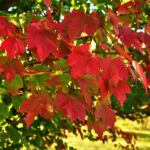
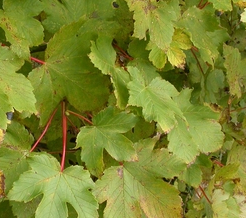
The five-lobed leaves have a toothed margin with pointed tips and characteristic red stalks. the green leaves change to a bright cheerful yellow in autumn after which the tree sheds its leaves. The fruit are brown woody balls seen on the tree in the Autumn, remaining there into winter when the ripe fruit splits shedding their seed. Due to its winged seeds (known as ‘helicopters’), which are produced in profusion in mature trees, the Sycamore is very adaptable and is able to colonise all kinds of habitats, including very usefully, waste ground!
The Sycamore, with its rounded dense dome-shaped crown is helpful to wildlife, providing, food and shelter to bees, various birds and small mammals. They are often planted in urban areas because of their ability to tolerate pollution and provide shade! They can also be planted as a windbreak due to a strong root system. Long lived although the age varies from 150 to 600 years in the wild.
Sycamore also symbolizes strength, eternity and divinity.
Sycamore trees grow in almost any soil, but they prefer deep, rich soil that is moist but well-drained. The bark of sycamore is covered with creamy-white and reddish-brown patches on the surface. Creamy patches represent newly formed, fresh bark, while reddish-brown pieces represent exfoliating, old bark. Sycamore tree care is easy. Fertilize the tree every other year if it isn’t growing as fast as it should or the leaves are pale. Water young trees deeply to keep the soil from drying out.
Container-grown trees can be planted any time of year with bare-rooted trees being planted in Autumn or spring.



 Habit (Shape)
 Hardiness
 Height (when grown)
 Leaf Colour
 Lighting
 Position
 Soil Type