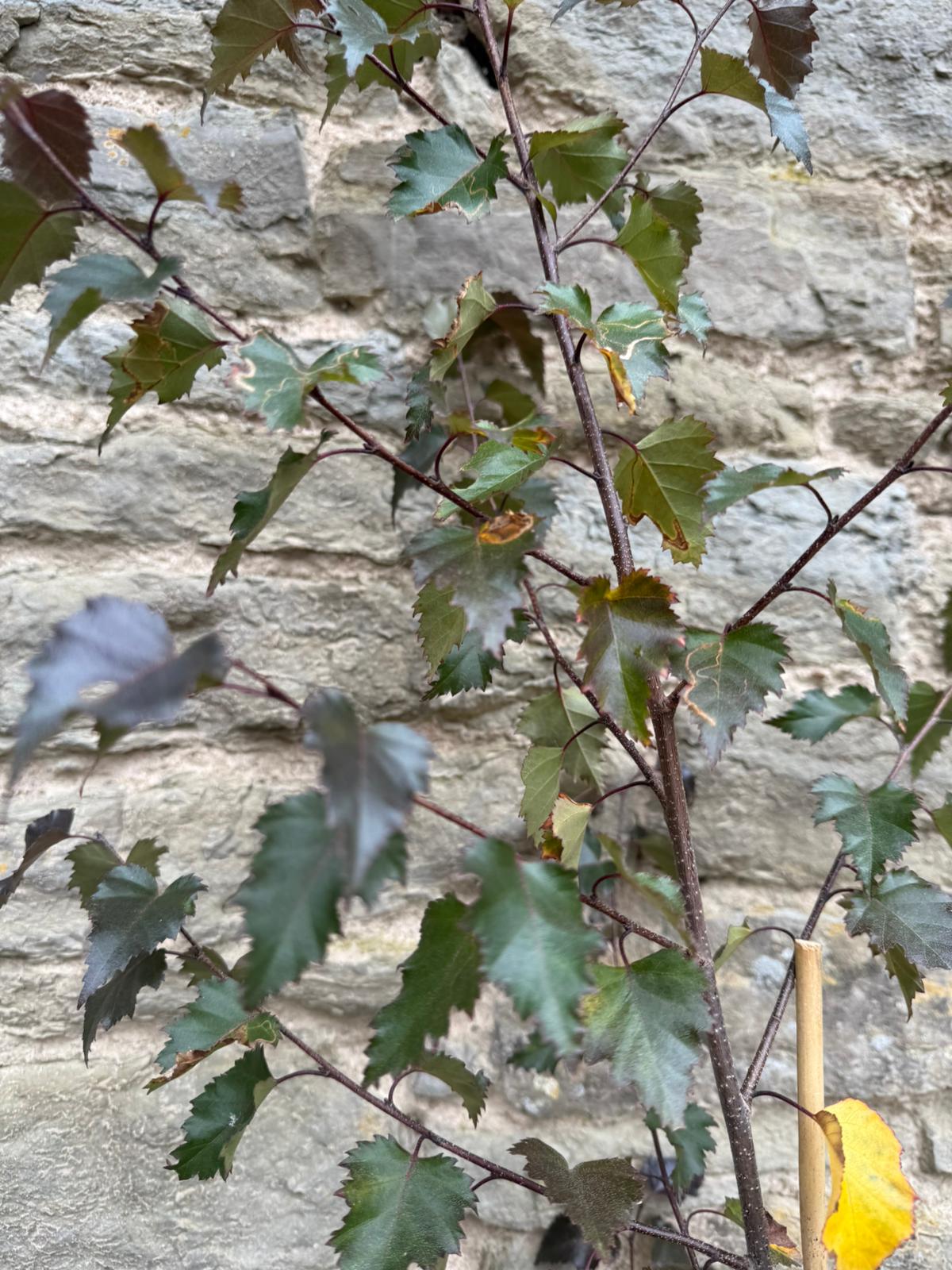
Purple Leaved Birch Trees
£59.50
Details:
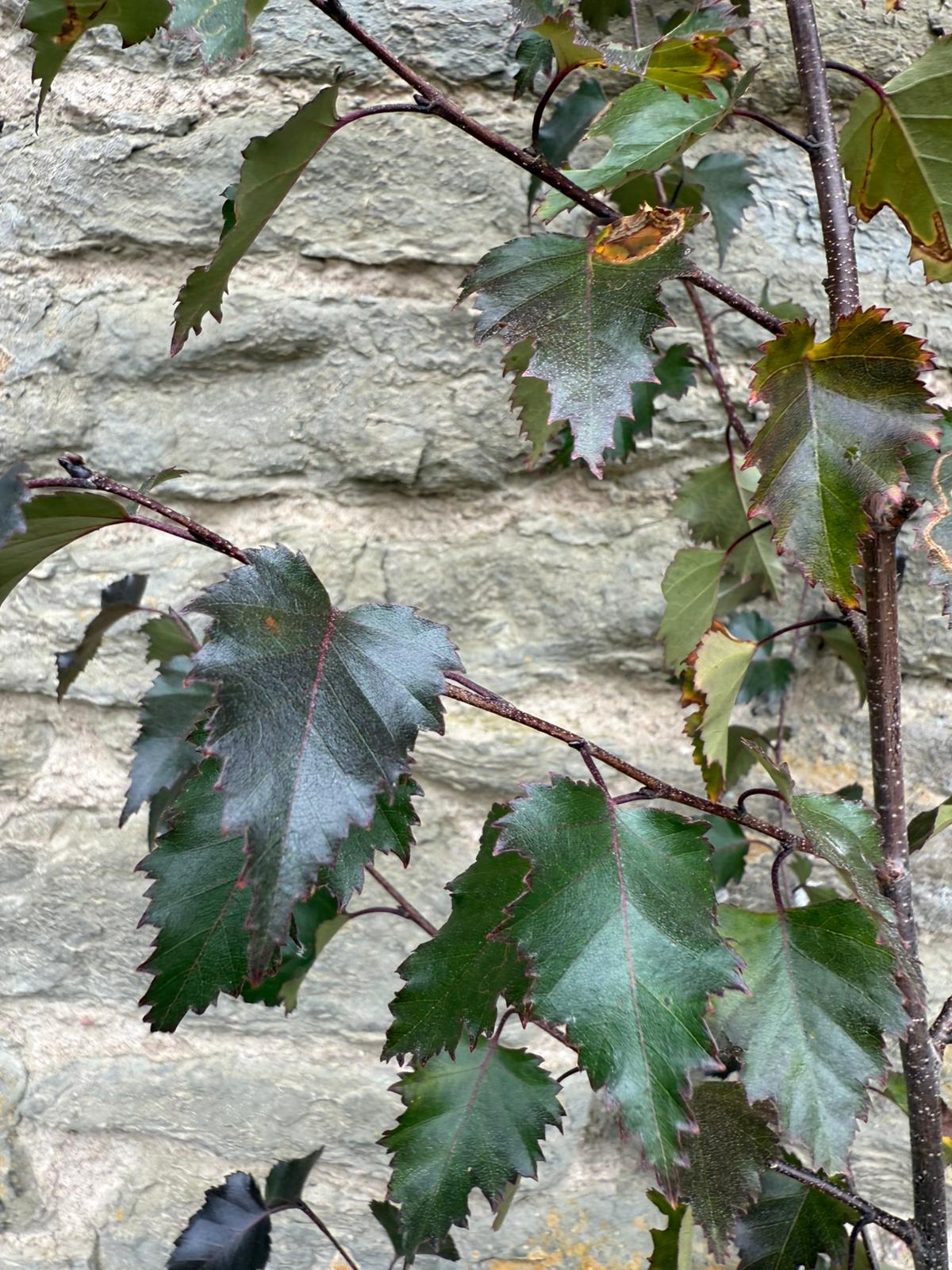
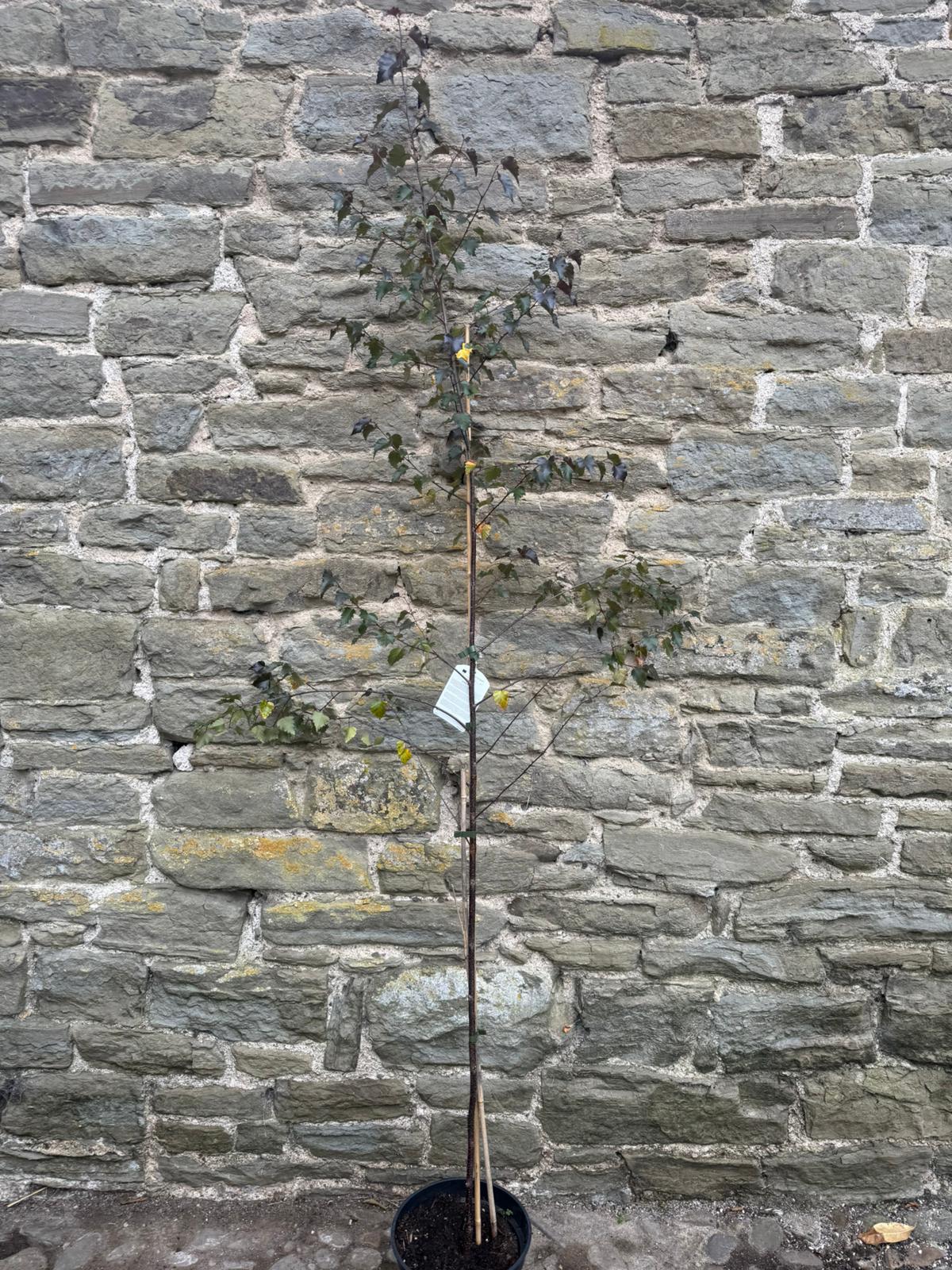
The Purple Birch tree is a medium-sized slow-growing tree with an open habit. Purple Birch has a white bark becoming black and rugged at the base of the tree. Appearing in spring, the serrated leaves are a dark reddish-purple, turning purple tinged with green in summer before becoming purple with bronze lights in autumn. The contrast of graceful weeping purple leaves stands out in contrast to the glorious white bark. A great candidate for groves.
| Wildlife | |
| Broad | |
| Hardy (Cold winter) | |
| 5-7m, 7-12m | |
| Purple | |
| Full Sun, Partial Sun | |
| Exposed, Sheltered | |
| Acidic, Chalky / Alkaline, Clay, Most soils, Well-drained |

Description
A medium-sized, slow-growing tree with an open habit. The Purple Birch tree has a white bark becoming black and rugged at the base of the tree. Appearing in spring, the serrated leaves are a dark reddish-purple, turning purple tinged with green in summer before becoming purple with bronze lights in autumn. The graceful weeping purple leaves stands out in contrast to the glorious white bark.
The Purple Birch will grow in sandy, chalk, loam, and clay soils but does best in sandy soil. It prefers well-drained moist soil but can cope with short dry spells. Happiest in a sunny or semi-shaded spot in both sheltered or exposed positions. It can be grown in most gardens giving constant pleasure. This purple leaf tree only casts a dappled shade, allowing for near underneath plantings. Often planted as a specimen tree, its glorious leaves, contrasting silver-white bark and graceful weeping habit give year-round interest. Betula pendula can be planted as a grove in larger gardens and country properties giving a wonderful focal point and are helpful for wildlife.
Cultivation: All gardens, specimen tree, as a grove
Soil: Prefers sandy but also chalk, loam, clay. Moist, well-drained
Aspect: Full sun, partial shade, north, south, east, west
Foliage: Deciduous
Flowering: Male & female catkins
Habit: Weeping
Growth: Slow
Fragrance: Faint
Hardiness: Fully hardy
Benefits to Wildlife: Yes
Height & Spread in Maturity: 20 years – 6m x 3m. 50 years – 12m x 7m