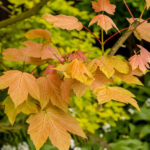
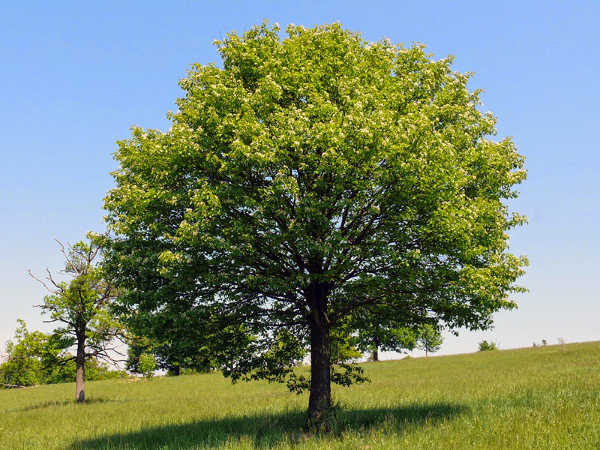
The Wild Service tree is an increasingly rare and wonderful deciduous tree with upright sweeping branches of textured bark. Clusters of white flowers in spring/early summer is followed by edible, (but not tasty) green-brown fruit. Lobed leaves similar to Maple turn a rich coppery red in autumn. A fully hardy native tree giving valued help to wildlife.
Growing to a height and spread of approx. 13m x 8m the Wild Service tree likes sun or partial shade, and are best grown in moist, well-drained soil of clay, sand and lime-based soils. Low maintenance, it will tolerate atmospheric pollution and dry conditions.
The Sorbus is a hermaphrodite with the reproductive parts contained within each flower. The flowers develop into green-brown oval fruit in mid-autumn.
Cultivation: Wildlife gardens, low maintenance
Soil: Well-drained, moist soil. Clay, sand & lime based.
Position: Sun, partial shade.
Aspect: South, west, east, north facing
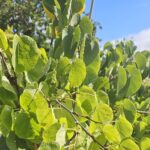
Foliage: Deciduous, lobed green leaves, good autumn colour
Flowering: Clusters of creamy white flowers late spring
Fruiting: Edible green-brown fruit in autumn.
Habit: Spreading, upright sweeping branches
Hardiness: Fully hardy
Growth: Fairly vigorous
Benefits to Wildlife: Very helpful
Height & Spread in Maturity: Approx 13m x 8-9m
History: Sadly, the Service Tree is becoming rare. Wild Service trees are often to be found in the Oak and Ash woods and in pockets of ancient woodland. Native to Britain and parts of Europe, Africa and Asia, it is an ancient-woodland indictor. Finding one while exploring could be a sign that you are in a rare habitat.



 Attracts
 Blossom Colour
 Flowering Period
 Habit (Shape)
 Hardiness
 Height (when grown)
 Leaf Colour
 Lighting
 Position
 Soil Type