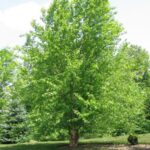
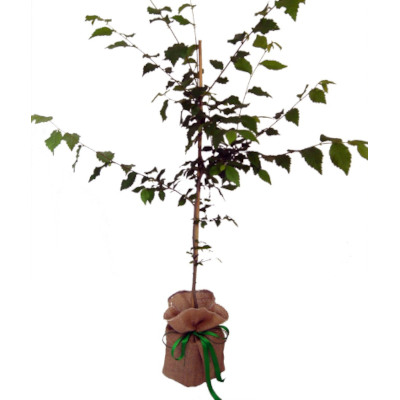
A disease-resistant hybrid, this Elm “Ulmus wingham” has been bred to take the place of our wonderful lost English Elm. With an upright habit Wingham saplings have dark green leaves and needs a rich fertile moist soil to thrive. In maturity the fast-growing Wingham Elms will provide a fairly large canopy of mid-green oval leaves.
Acidic, Chalky / Alkaline, Clay, Most soils, Well-drained
JAN
FEB
MAR
🍃
APR
🌸🍃
MAY
🍃
JUN
🍃
JUL
AUG
🍃
SEP
🍃
OCT
🍃
NOV
🍃
DEC
🌸 Flowering🍏 Fruiting🍃 Leaves
Description
A disease- resistant hybrid, the Elm – Ulmus wingham has been bred to take the place of our wonderful lost English Elm. With an upright habit Wingham saplings have dark green leaves and needs a rich fertile moist soil to thrive. In maturity the fast-growing Wingham Elms will provide a fairly large canopy of mid-green oval leaves.
It is wind resistant, hardy and tolerated Urban pollution. It flowers at an early age and in healthy conditions will grow up to 7m in 10 years. It is helpful to insects and is an ideal host for the rare White- Letter Hairstreak butterfly. It is important to keep well-watered in dry weather and mulch well.
It is the most Dutch Elm disease resistant cultivar available and we all hope it will grow to give the pleasure and beauty of our sadly missed and loved English Elm.
Cultivation: Landscape, tolerant to Urban pollution
Soil: Rich fertile, moist soil.
Position: Sun semi shade, wind resistant
Foliage: Deciduous, green oval leaves
Flowering: Flowers from an early age
Habit: Upright
Hardiness: Fully hardy
Growth: Fast growing
Benefits to Wildlife: Yes, especially endangered White-Letter Hairstreak butterfly
Height & Spread in 10 years: 7m x 4m (approx.)
DID YOU KNOW: Named after Kentish Village where it was successfully trialled by Dr. David Herling (1963-20200 With a strong resistance to elm dieback. The original hybrid came from the Institute of Plant Protection in Florence Italy where it was first trialled in 1973.
It shows good promise as a host tree to the White-Letter Hairstreak butterfly which has become endangered due to its dependence on Elms. The Wingham hopefully will help save this lovely butterfly survive as insects are fairly adaptable although it will possibility not be as palatable as our few native Elms.



 Attracts
 Flowering Period
 Habit (Shape)
 Hardiness
 Height (when grown)
 Leaf Colour
 Lighting
 Position
 Soil Type