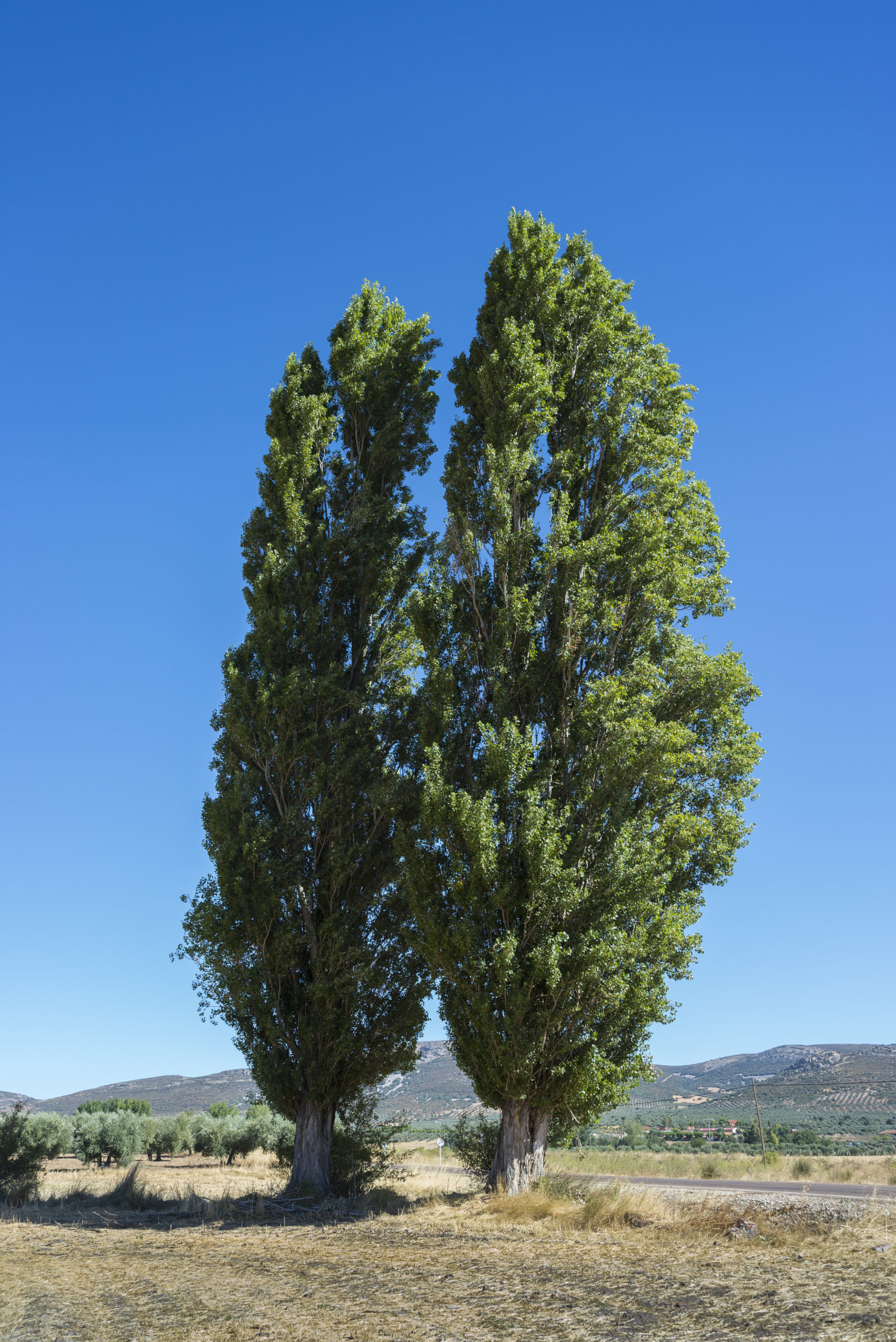
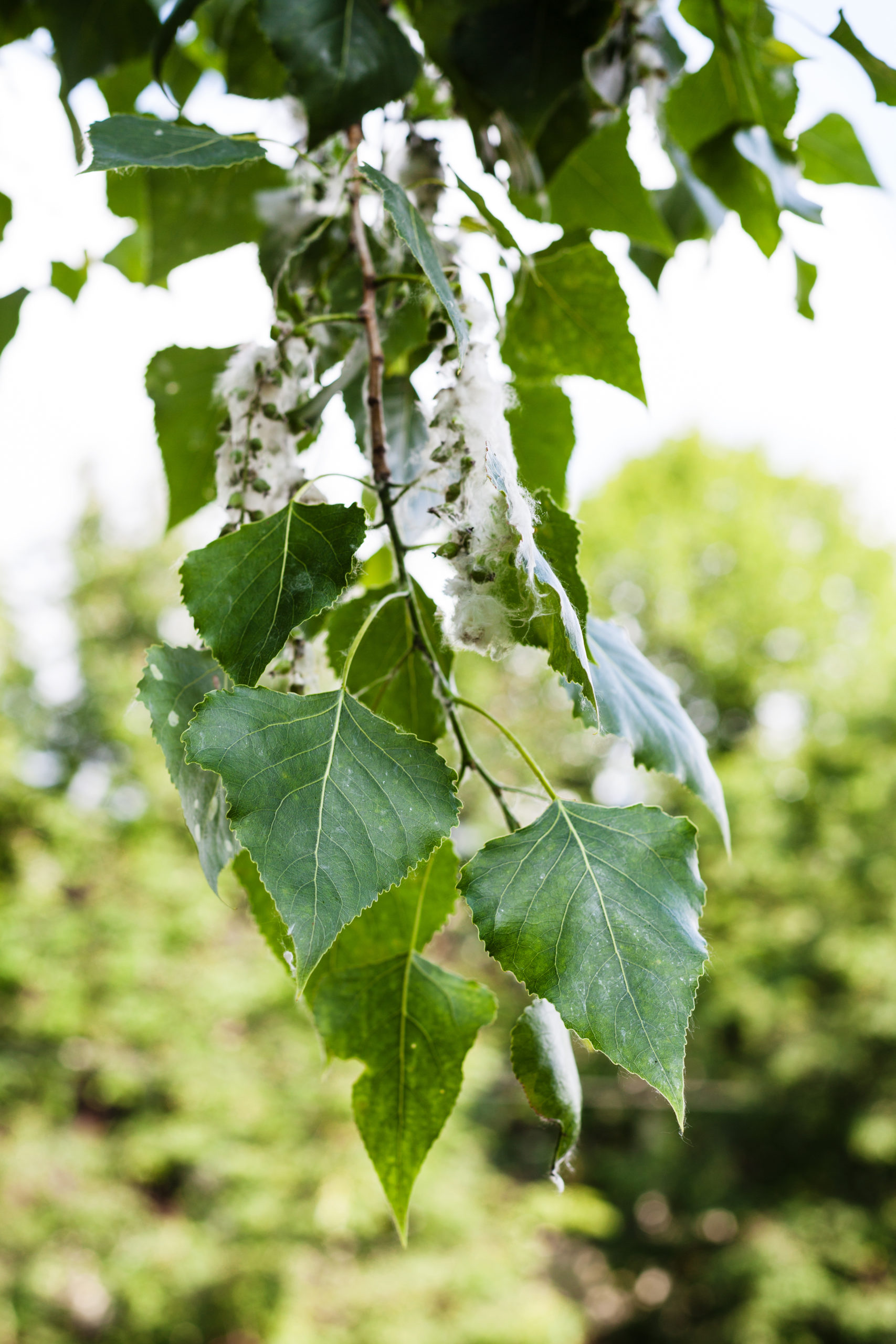
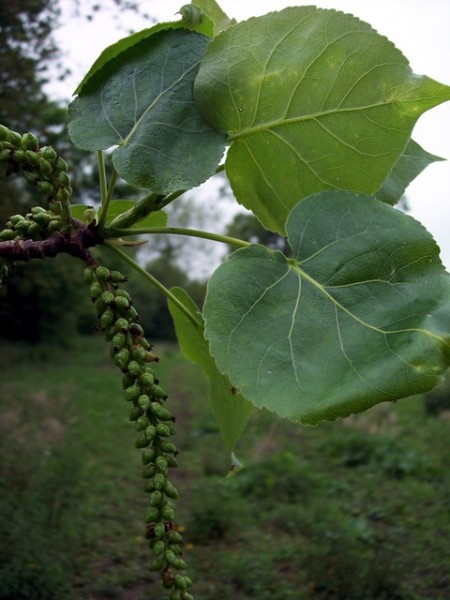
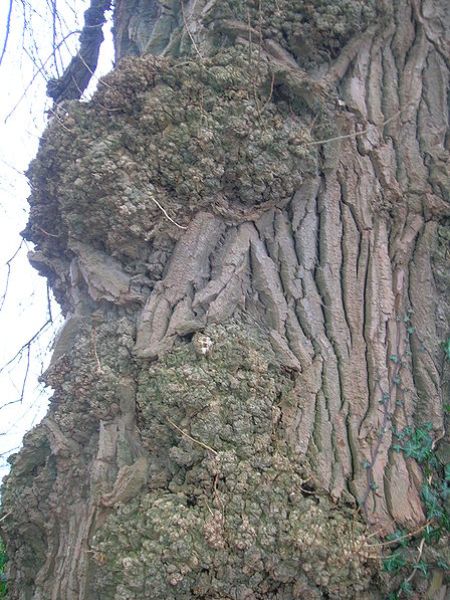
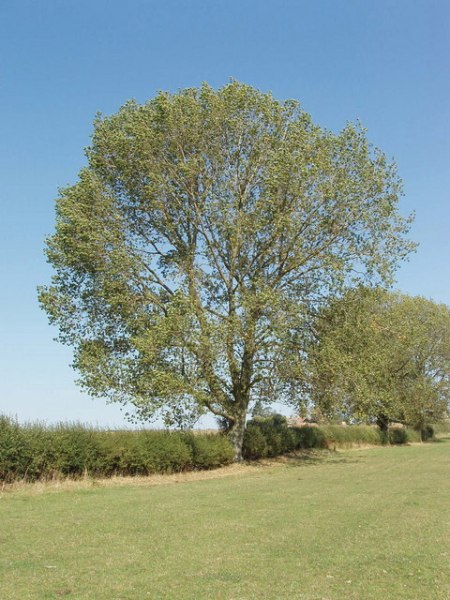
The Poplar Black tree is a beautiful and imposing tree with whispering green leaves turning yellow in Autumn. Fast-growing deciduous spreading tree with dark bark and heart-shaped bronze leaves turning to bright green when mature. Catkins are borne in March and April. Poplar tree is an excellent windbreak.
A rare variety, Black poplar thrives on river banks but can be grown in most large spaces. Fast-growing deciduous spreading tree with dark bark and diamond-shaped bronze leaves turning to bright green when mature. Red catkins are borne in mid-spring. Once chopped down to the verge of extinction, there has been an awakened interest in their conservation and regeneration. Do not plant close to buildings as they have an extensive root system.
The Poplar tree is native to northwest Europe. A declining species in the UK, it is rare and grows in isolation. It is most prevalent in Shropshire, Cheshire, Somerset, and East Anglia and grows best in boggy conditions, near ditches and floodplains. Fully hardy, preferring sun and deep fertile well-drained soil.
Please ring for the wholesale price on windbreak plantings.
Soil: Deep well-drained fertile soils.
Habit: Deciduous, fast growing spreading tree
Position: Full sun
Flowering period: Catkins in mid spring
Hardiness: Fully hardy
Special features: Good windbreak and thrive on river banks.
Eventual Height: 20m /70ft x 15m/50ft
Wildlife friendly
Black poplar is the food plant for the caterpillars of many moths, including the hornet, wood leopard, poplar hawk and figure of eight. The catkins provide an early source of pollen and nectar for bees and other insects, and the seeds are eaten by birds.
Symbolism, Folklore & Old Wives Tales
According to Greek mythology, the Black Poplar was created after Phaeton’s fatal attempt to drive Apollo’s chariot. Phaeton’s sisters made such a fuss mourning his death that the gods transformed them into Black Poplars. It is also said that fallen red male catkins are Devil’s fingers, and bring bad luck if picked up.



 Blossom Colour
 Flowering Period
 Habit (Shape)
 Hardiness
 Height (when grown)
 Leaf Colour
 Lighting
 Position
 Soil Type