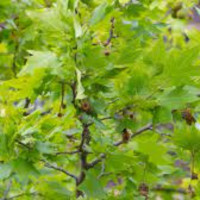
London Plane Trees

£67.50

Details:

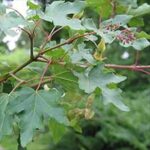
A lovely large deciduous tree that provides good shade in summer and visual interest in winter. Withstanding the rigors of urban life, it has an excellent tolerance for air pollution and is a good choice for city streets, parks and other public land. Loved for their large broad palmately lobed green leaves, similar to a maple and their grey green bark that peels off revealing creamy patches of smooth inner bark.

AttractsBirds
Habit (Shape)Broad
HardinessHardy (Cold winter)
Height (when grown)12-17m
Leaf ColourGreen
LightingFull Sun
PositionExposed, Sheltered
Soil TypeAcidic, Chalky / Alkaline, Clay, Most soils, Well-drained
JAN
FEB
MAR
🍃
APR
🍃
MAY
🍃
JUN
🍃
JUL
AUG
🍃
SEP
🍃
OCT
🍃
NOV
DEC
🌸 Flowering 🍏 Fruiting 🍃 Leaves

Description

The London Plane tree is a lovely large deciduous plane tree that provides good shade in summer and visual interest in winter. Withstanding the rigors of urban life, it has an excellent tolerance for air pollution and is a good choice for city streets, parks, and other public land. Loved for their large broad palmately lobed green leaves, similar to a maple, and their grey-green bark that peels off revealing creamy patches of smooth inner bark. The peeling barks enable the London Plane to shed pollutants helping to keep the tree healthy. The spreading crown of leaves turns a rich yellow-orange before falling in autumn. Green ball-shaped fruit, both male and female are on the same tree and hang down on different stems.


London Planes trees can live for up to four hundred years, growing to around 35m. They transplant easily and can tolerate most soils, make sure to water, fertilize and mulch when young as these trees are often planted in poor soil and restricted rooting space. After pollination by air, the female flowers develop into spiky fruits and break up over the winter to release their seeds.


Do not plant near a building as the tree has a vigorous root system.


History: The London Plane is not actually a native to England. It is not native anywhere as it is a hybrid of two trees – the American Sycamore and the Oriental Plane tree. It is thought to have occurred accidentally sometime during the 17th century in either Spain or London when the two species were planted close to one another.


Cultivation:
Urban areas, city parks

Soil: Prefers rich well-drained soil but tolerates poorer soils

Position: Full sun, tolerates partial shade

Foliage: Deciduous, large palmate green leaves                              

Flowering: Male & Female on the same tree

Fruiting: Yes

Habit: Spreading crown

Hardiness: Fully hardy

Growth: Vigorous

Benefits to Wildlife: Good for nesting birds

Height & Spread in Maturity  30m x 18m