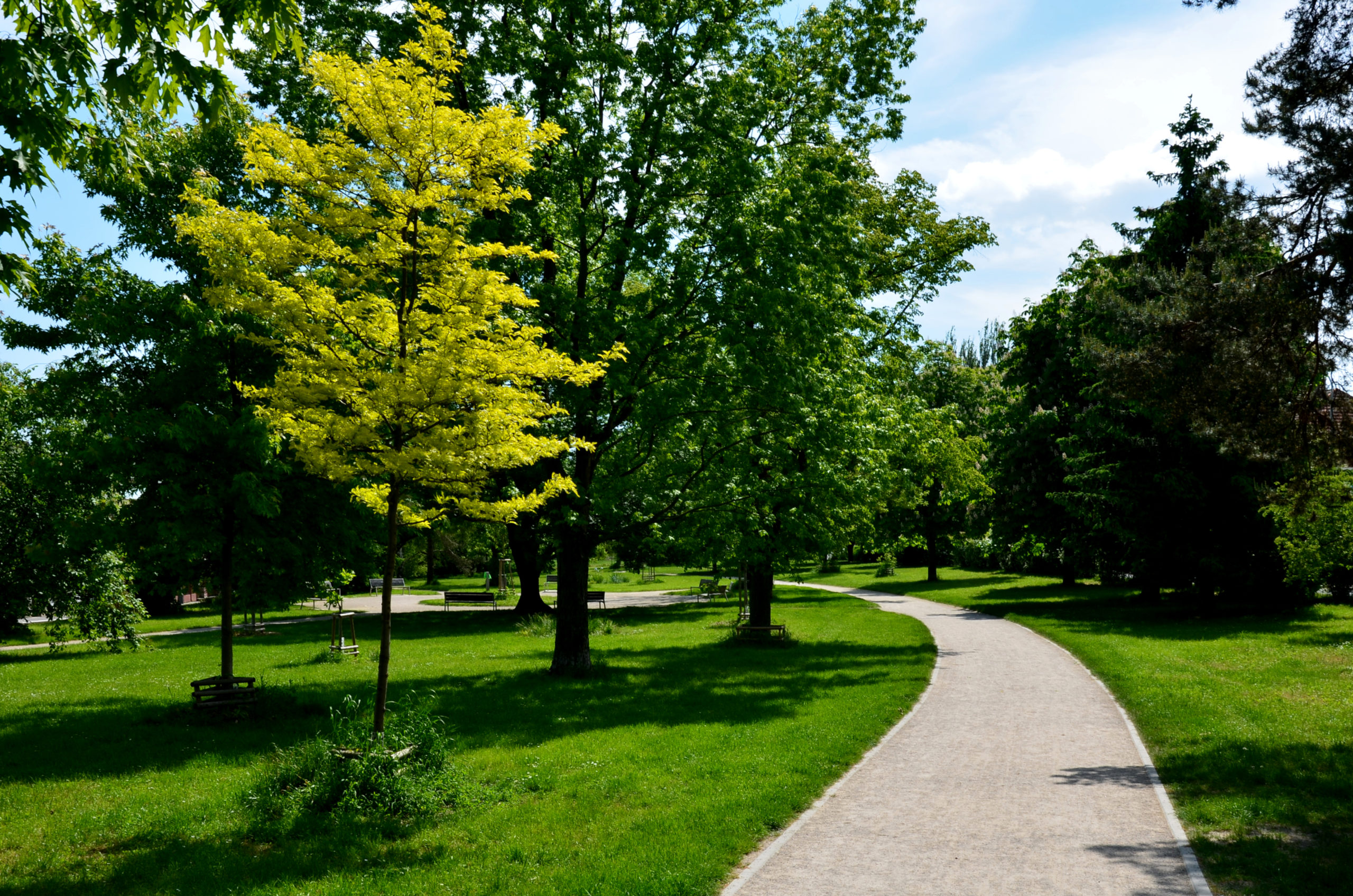
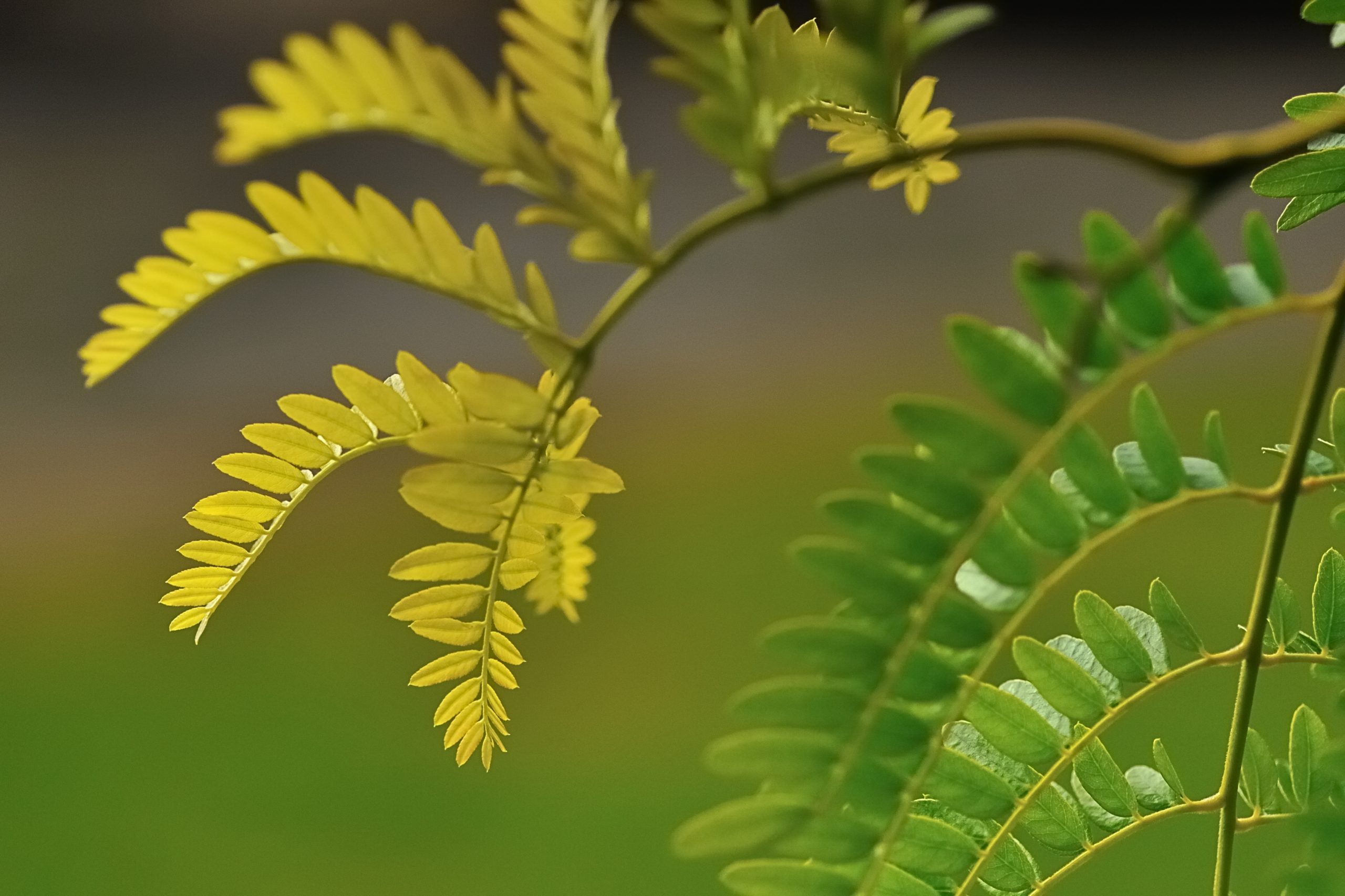
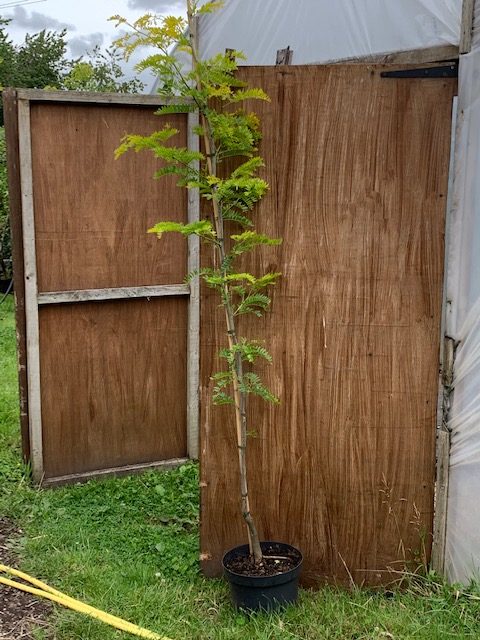
Sunburst is a deciduous tree with a spreading crowned head. A member of the Pea family with delicate fern like bipinnate leaves and a slight weeping foliage. Sunburst is a decorative and popular tree with bright yellow leaves in spring turning to green in summer with a second flush of yellow leaves around July. Autumn colour is usually yellow too. It makes a lovely feature tree in most gardens and has become a well performing alternative to the more delicate Robinia Frisia.
Gleditsia is a medium sized thornless tree, growing up to about 8m (25ft) They are adaptable trees and can cope with various conditions but they do not like wet or waterlogged ground or very windy positions and do best in drier well-drained soil.
A deep-rooted tree, it can tolerate drought, growing on most soils such as chalk, loam, clay and sand, well-drained, acid, alkaline and neutral in a sunny protected position.
Cultivation: Parkland, small garden tree, city/urban sites
Soil: Chalk, loam, clay & sand. Well drained
Position: Full sun, all aspects in warm protected position
Foliage: Deciduous, bright yellow leaves turn to green. Autumn yellow
Flowering: Insignificant clusters in May/June
Habit: Spreading open crown
Hardiness: Hardy with protection
Growth: Slow growing
Benefits to Wildlife: Good for Bees
Height & Spread in Maturity: Approx 8- 12m x 4-6m
History, Symbolism: Of Interest:
Gleditisia/Honey Locust Sunburst is native to North America 1947 and was introduced in the mid-1950, winning the Award of Garden Merit in 2002



 Soil Type
 Habit (Shape)
 Position
 Flowering Period
 Height (when grown)
 Lighting
 Hardiness
 Leaf Colour
 Attracts