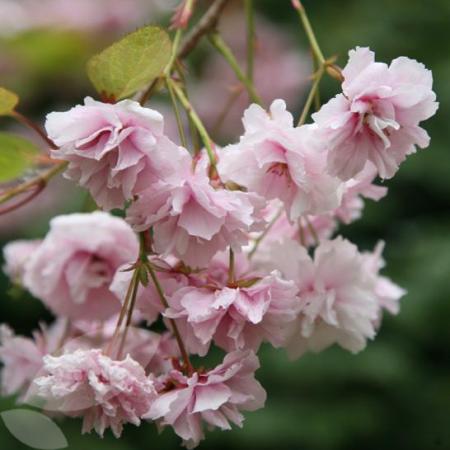
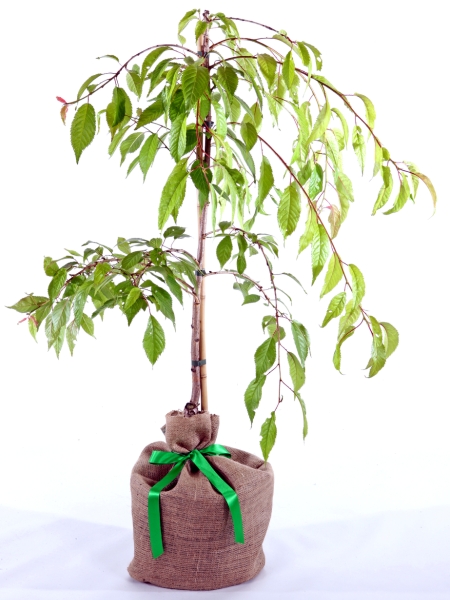
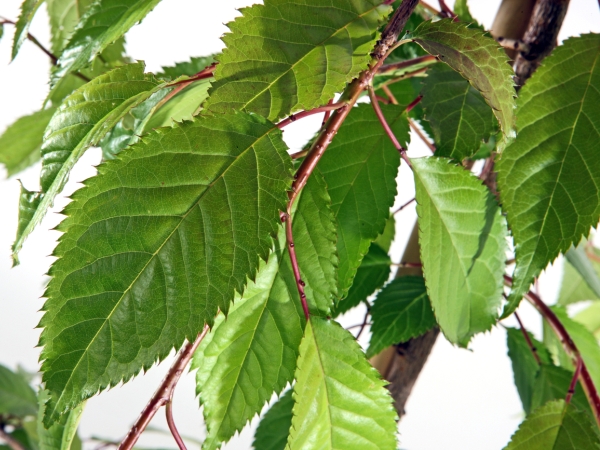
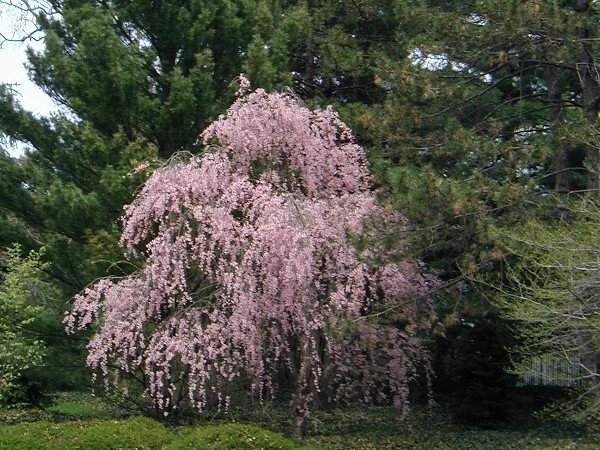
The Cheals Weeping Cherry is a small weeping cherry tree with arching branches bearing densely clustered, double rose pink flowers in spring. Lance shaped leaves are slightly bronzed turning glossy pale green. Fully hardy, loving sunshine and well-drained soil.
Acidic, Chalky / Alkaline, Clay, Most soils, Well-drained
JAN
FEB
MAR
🍃
APR
🌸🍃
MAY
🌸🍃
JUN
🍃
JUL
AUG
🍃
SEP
🍃
OCT
🍃
NOV
DEC
🌸 Flowering🍏 Fruiting🍃 Leaves
Description
Cheal’s Weeping is a small spectacular ornamental tree suitable for containers, and any gardens. Wonderfully blousy covered in deep pink double blossom in April and May. The leaves emerging at the same time as the flowers, tinged bronze then green turning to orange and yellow in the autumn. The weeping habit give a graceful outline and is a year-round asset. Easy to maintain, in sun or partial shade, it likes moist deep fertile loamy soil, growing best on alkaline soil. Ornamental cherries do not like waterlogged or permanently wet ground and organic matter should be added to poor soils when planting. Tolerant of pollution, Cheal’s Weeping is a good choice for an urban garden.
Characteristics: Weeping, suitable for small spaces
Soil:Moist fertile loam soil, likes Alkaline,
Position: Sun, partial shade, does not like waterlogged soil
Habit:Weeping, arched branches give a graceful outline
Hardiness:Hardy except in wet soils
Growth:Slow to medium
Benefits to Wildlife:Mainly bees and butterflies
Height & Spread in Maturity:5m x 2.5-3m
Top Worked:1.2m x 1m
Prunus Kiku shidare Zakura will develop its shape without pruning but prune in summer after flowering if it’s necessary to remove dead or crossing branches. If planting more than one tree space the trees around 6 metres apart.
Native to Japan, Kiku Sidare Zakura was introduced to Britain in 1915 and is much loved by gardeners for its glorious densely clustered blossom and graceful outline.



 Attracts
 Blossom Colour
 Flowering Period
 Hardiness
 Habit (Shape)
 Height (when grown)
 Leaf Colour
 Lighting
 Position
 Soil Type