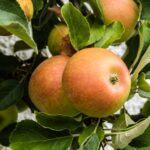
Bramley apple tree’s seedling is a vigorous spreading medium size long-lived tree which is generally used in cooking due to it delectable crisp sour taste. A beautiful display of pale pink blossom in spring is followed by a green foliage and large glossy bright green apples, (some red flushing) in autumn which keep well into winter.
Bramley trees provide nectar and pollen, helpful to bees, butterflies, birds and other wildlife. They prefer sun, in a sheltered south, west, east or north facing position with moist fertile well-drained soil of clay, loam or sand. Not self-fertile so it does need another apple to pollinate. An advantage of apple Bramley is that they have a good resistance to ‘apple scab and mildew.’
Cultivation: Not Self-fertile. City, country, informal and orchards
Soil: Moist, fertile, well-drained
Position: Sun, Sheltered, South, west, east, north facing.
Foliage: Deciduous, soft green leaves spring to autumn
Flowering: Bramley apple has Pale pink blossom in spring
Fruiting: Autumn, stores well into winter
Habit: Spreading
Hardiness: Fully hardy
Growth: Vigorous, long lived
Benefits to Wildlife: Bramley trees are very helpful to wildlife
Height & Spread in Maturity: Approx 6m x 5m
RHS Award of Garden Merit
History: The first Bramley apple tree grew from pips planted by a young Mary Ann Brailsford in her garden in Southwell, Nottinghamshire in 1809. She died never knowing her apple would be so famous. Bramley is named from the person who bought Mary Ann’s house.
In 1856 a local nurseryman Henry Merry weather asked if he could take cuttings from the tree in the garden. This was granted on the condition that the trees would be called Bramley.
Poor Mary Ann Brailsford.. The first recorded Bramley was in 1862.




 Attracts
 Blossom Colour
 Flowering Period
 Hardiness
 Soil Type
 Leaf Colour
 Position