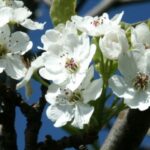
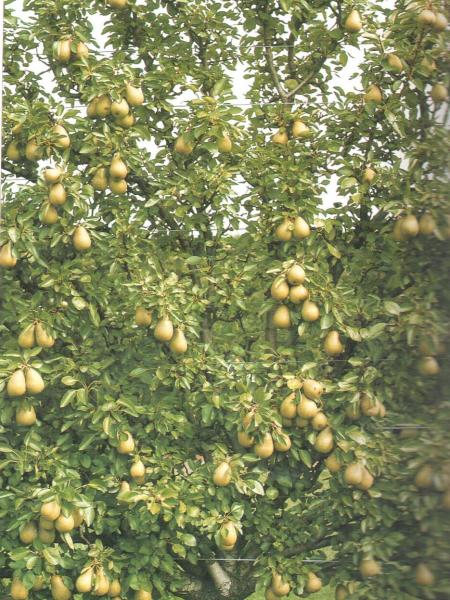
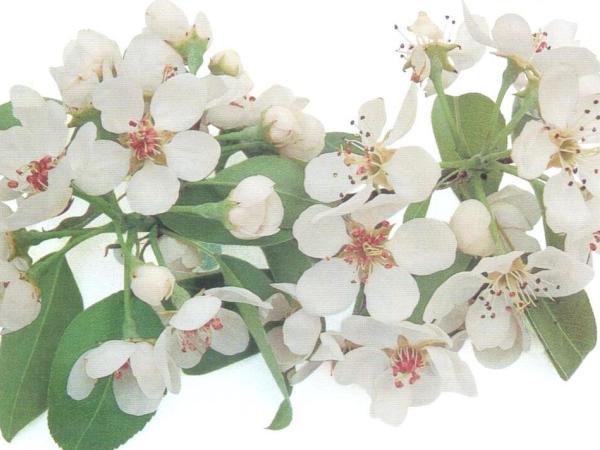
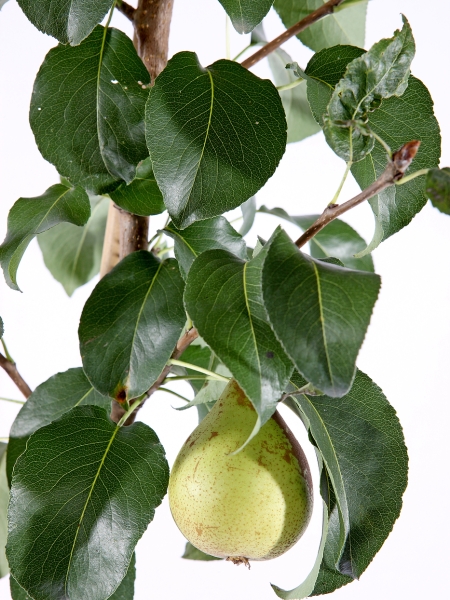
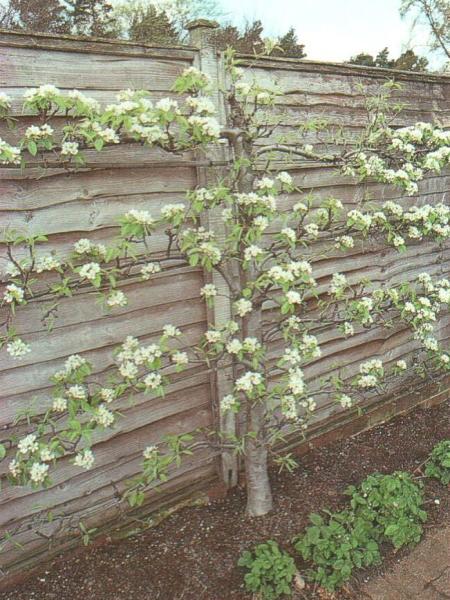
The ‘Conference’ Pear is Britain’s most popular pear tree, because it produces healthy crops of green fruits that ripen to golden yellow with a sweet, juicy flavour. Self-fertile and reliable, this long-lived medium-sized tree grows well in most gardens. In spring the tree is covered in pretty white blossom. Hardy and easy to grow, it’s an excellent choice for beginners.
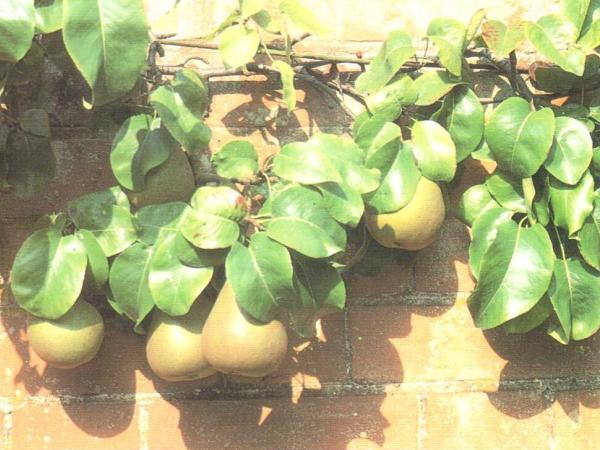
The Pear ‘Conference’ has been a household favourite since it was first exhibited in 1885 and remains the UK’s most widely grown pear. It is a delicious pear and one of the best for slightly shady or colder areas. ‘Conference’ pears can be eaten straight from the tree, stored for a few weeks, or used in desserts and preserves. With beautiful clusters of white blossoms in spring which are loved by bees and fruit in late summer and autumn which are loved by birds and small creatures.
The tree needs a rich-well drained moist soil, preferably light and loamy. If planted in more northern areas the Conference pear tree will need a warm protected position and does prefer sun. The more sun the happier the tree will be. Pear trees in general are amenable to pruning – either a hard pruning in winter, or a light summer pruning. If possible, dig in plenty of manure and compost before planting. In spring, weed, mulch and spray with a seaweed solution once a month. When the Conference pear tree is smaller try to protect the blossom from frost. Reliable, hardy, and delicious, the Pear ‘Conference’ remains the standard pear for British gardens.
Benefits to Wildlife: Bees, insects, birds & small creatures
Height & Spread in Maturity:Quince Eline (Dwarf) 1.75 – 2 metres x 1.2 metres Quince A (Semi-vigorous): 4 metres x 3 metres
History: Pears are native to Europe and Asia. The first cultivated varieties were selected from the wild in prehistory. Ancient Phoenicians and pre-Christian Romans grew several improved sorts. By the time of Cato, there were at least half a dozen varieties. Pliny recorded over forty and Palladium recorded fifty-six. In Britain, in 1640 only five dozen were known but this rose to more than seven hundred in 1842. This was mainly the result of the work of a few dedicated breeders in France and Belgium.



 Attracts
 Blossom Colour
 Flowering Period
 Hardiness
 Height (when grown)
 Habit (Shape)
 Leaf Colour
 Lighting
 Pollination Group
 Position
 Soil Type