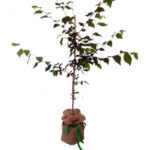
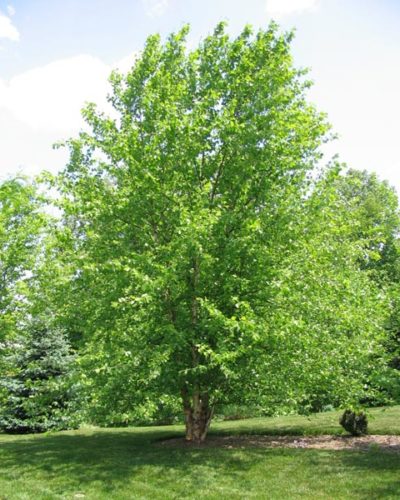
The River Birch Betula nigra ‘Heritage’, can be planted almost anywhere although as the name suggests, it grows happily along riverbanks. With male and female catkins opening in spring before the glossy green leaves emerge. In autumn, the leaves turn a glorious yellow colour. With its unique curling bark as it ages, the River Birch is a beautiful tree to plant in most gardens.
The River Birch tree likes acid, moist well-drained, loam, sand and clay soil. It tolerates some flooding as well as drought. The tree works well in holding river banks and keeping erosion in check.
Cultivation: Riverbanks, landscape
Soil: Moist well drained acid soil, loam, sand, clay
Position: River Birch likes Sun, partial shade, south, west, east, north facing. Sheltered/exposed
Foliage: Deciduous, green to yellow in autumn
Flowering: Male & female catkins in spring
Fruiting: Some seeds
Habit: Oval shape
Hardiness: This birch tree is fully hardy
Growth: Medium/fast
Benefits to Wildlife: Yes, especially birds
Height & Spread in Maturity: 13m x 7m
History: Developed in America and named ‘Urban Tree of the Year’ in 2002.
It was once used for yokes, wooden shoes and other uses on farms. It is often grown now to combat soil erosion whilst giving beauty and pleasure to humans and wildlife alike.



 Attracts
 Habit (Shape)
 Hardiness
 Height (when grown)
 Leaf Colour
 Lighting
 Position
 Soil Type