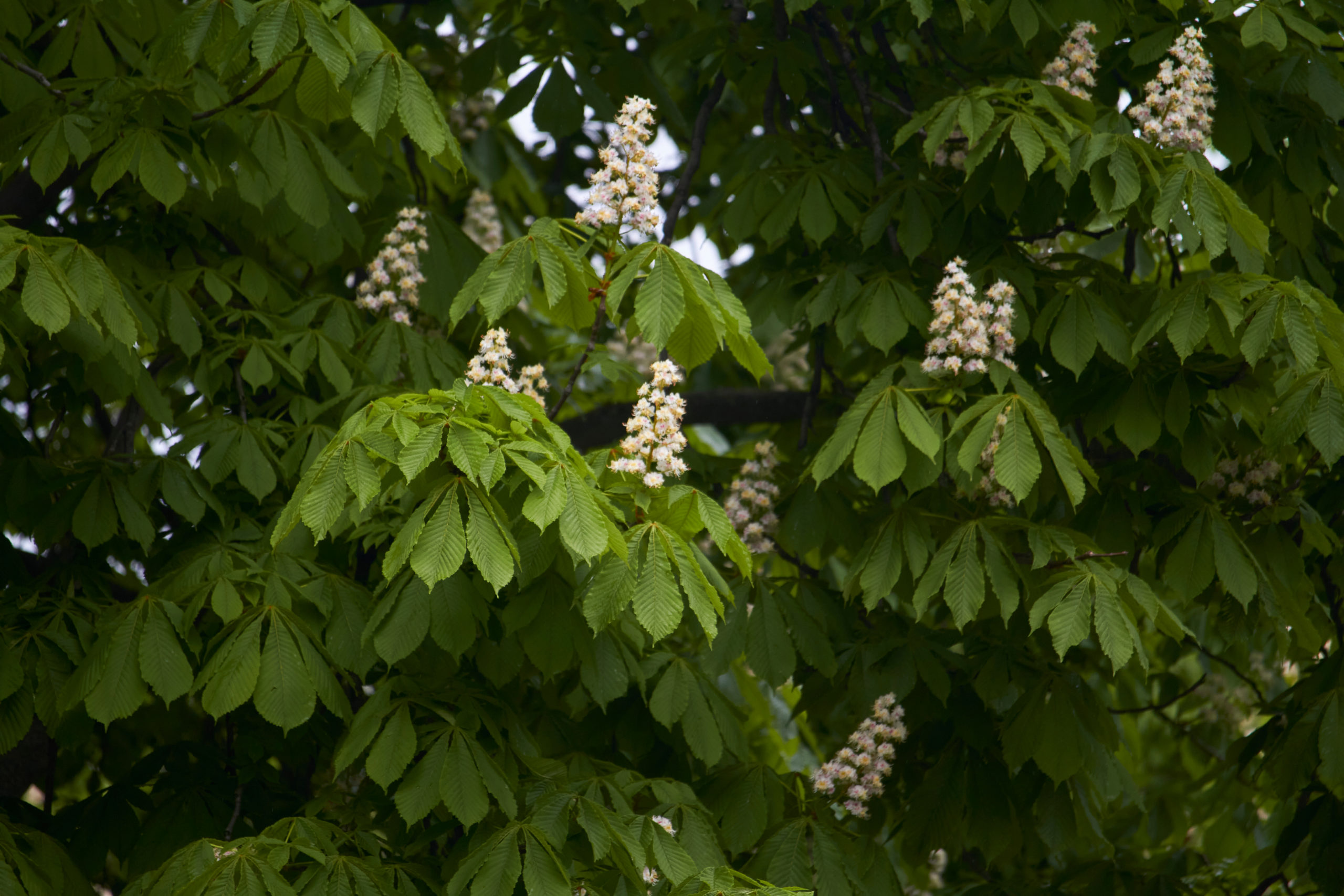
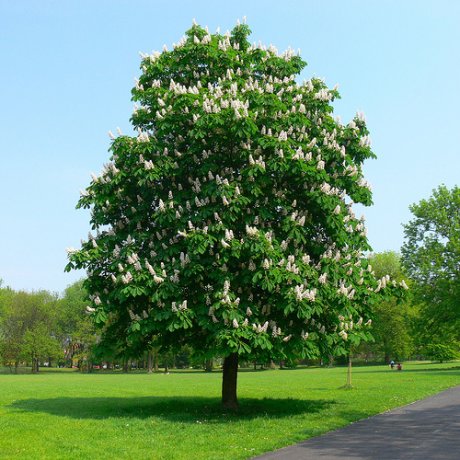
The Horse Chestnut is a beautiful ornamental tree with wonderful leaves and flowers and of course known for its prickly fruit which becomes our bright glossy brown conkers much loved in the United Kingdom. A large, broad-crowned deciduous tree with deep green leaflets, turning amber-brown in autumn. The beautiful creamy-white flowers with a pink or yellow splash at its base gives a glorious display like candles to lighten up our May landscape.
Horse Chestnuts can tolerate a wide range of soils, including dry, sandy, wet clay and chalk but grow best on moist well-drained fertile soils. A large tree, wildlife friendly and growing to some 30m (100ft) Horse Chestnuts are a splendid sight planted as a street tree, avenues , parks or large gardens. Horse Chestnut trees do not like to be transplanted so plan where to plant your wonderful tree which will give you years and years of pleasure.
Cultivation: Parks, avenues, roadside & large gardens
Soil: Moist well-drained soils, but tolerates most soil,
Position: Sun, partial shade
Foliage: Deciduous, consists of 5 to 7 green leaflets in a leaf
Flowering: White candle-like flowers in late spring
Fruiting: Prickly fruit contain glossy brown conker seeds
Habit: Densley leaved with a broad crown
Hardiness: Fully hardy
Growth: Medium growth
Benefits to Wildlife: Pollen & nectar for Bees & Butterflies,
Conkers nourish small animals & deer
Height & Spread in Maturity: 30m x 20m
History, Symbolism: Of Interest: Imported from Southeastern Europe or possibly Turkey in the 1600s, Horse Chestnut grace parks, avenues and as street trees, they are best loved for their wonderful flowers and more especially for their Conkers, a favourite game in the UK for both children and adults alike until health & safety spoilt it for us all.



 Soil Type
 Habit (Shape)
 Position
 Flowering Period
 Height (when grown)
 Lighting
 Hardiness
 Blossom Colour
 Leaf Colour
 Attracts